
English below
🇳🇱 Nederlands
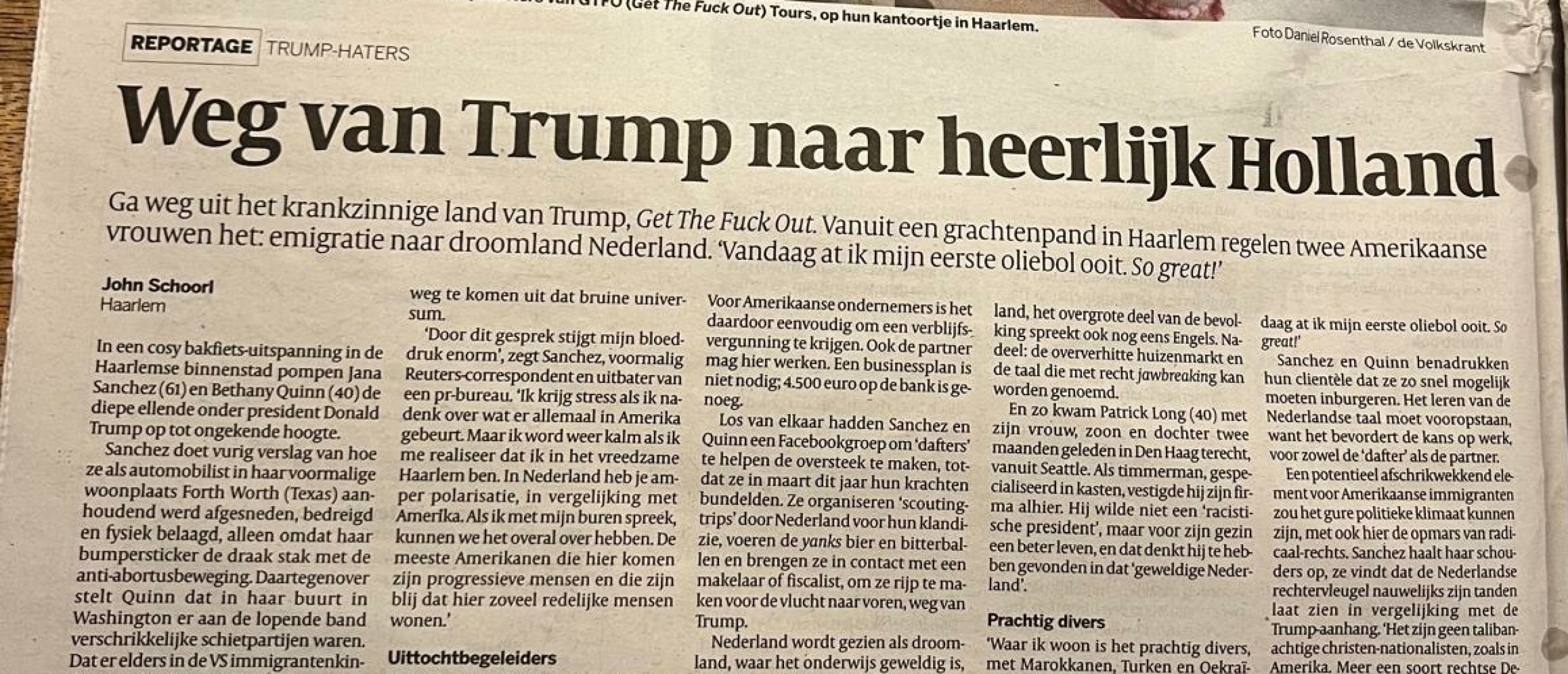
Afgelopen weekend las ik in de Volkskrant over Bethany Quinn en Jana Sanchez, twee Amerikaanse vrouwen die vanuit Haarlem landgenoten helpen om naar Nederland te verhuizen — omdat Nederland voelt als een veilig, vredig en vrij alternatief. (lees hier het artikel)
Ik hoor veel expats over die aantrekkingskracht van ons kikkerlandje. In mijn boek Expatfactor beschrijf ik dit als 1 van de 5 'expatprofielen' in Nederland: dit noem ik de Lifestyle-Pat. Mensen die hiernaartoe komen omdat het dagelijks leven in ons land hen aantrekt, vaak gevoed door het beeld van Nederland als vrij, tolerant, multicultureel en “je redt je wel met Engels”. Werk is van secundair belang. De DAFT visumregeling die de klanten van Bethany en Jana benutten, helpt om het hoofddoel te bereiken: leven in Nederland.
Maar hier zit een belangrijk onderscheid dat ik in de praktijk steeds terugzie:
Nederland als droomland is een startpunt,
maar
Nederland als leefland is een vaardigheid.
De eerste weken (soms maanden) zijn vaak één grote ‘arrival fascination’: alles is leuk, overzichtelijk en “charming”. Een intense verliefdheid waarbij alles geweldig is.
En daarna? Dan begint het echte landen.
Want gelukkig wonen en werken als expat in Nederland gaat zelden mis op papierwerk of fietsregels. Het gaat mis op ongeschreven regels en cultuurverschillen:
- hoe directheid bedoeld is (en hoe die voelt)
- hoe je meedoet in overleg- en consensuscultuur
- hoe “doe maar gewoon” doorwerkt op zichtbaarheid en profilering
- hoe je vriendschappen en netwerken bouwt in een relatief gesloten sociaal systeem
En dan is er nog iets dat we vaak onderschatten: zodra je als international hier komt wonen en werken, stap je óók een maatschappelijk debat binnen. Denk aan woningmarkt, (belasting)regelingen en de vraag “passen mensen zich wel aan?” Niet iedereen is blij met expats.
Juist daarom helpt het enorm als je laat zien: ik ben hier niet alleen om te consumeren, ik ben hier om te begrijpen en bij te dragen.
Mijn uitnodiging (voor iedereen die ‘droomland Nederland’ overweegt):
Geniet van de start, wees 'verliefd' — én maak een plan voor fase 2. Stel jezelf deze drie vragen:
- Wat ga ik doen om de Nederlandse (werk)cultuur echt te begrijpen?
- Waar bouw ik een leven buiten mijn expatbubbel?
- Hoe laat ik zien dat ik wil meedoen (taal, gewoonten, relaties), niet alleen “hier zijn”?
=====
🇬🇧 English
Last weekend I read in de Volkskrant about Bethany Quinn and Jana Sanchez, two American women who, from Haarlem, help fellow Americans relocate to the Netherlands — because the Netherlands feels like a safe, peaceful, and free alternative. (this is the article, in Dutch)
I hear a lot of expats talk about that pull of our little country. In my book Expatfactor, I describe this as one of the five “expat profiles” in the Netherlands: what I call the Lifestyle-Pat. People who come here because they’re drawn to everyday life in our country, often fueled by the image of the Netherlands as free, tolerant, multicultural, and “you can get by in English.” Work is secondary. The DAFT visa arrangement that Bethany and Jana’s clients use helps them achieve the main goal: living in the Netherlands.
But there’s an important distinction I keep seeing in practice:
The Netherlands as a dream country is a starting point,
but
the Netherlands as a country you can truly live in is a skill.
The first weeks (sometimes months) are often one big “arrival fascination”: everything is fun, orderly, and charming. An intense infatuation where everything feels great.
And then? Then the real settling in begins.
Because building a happy life and career in another country rarely falls apart because of paperwork or cyclingrules. It falls apart because of unwritten rules and cultural differences:
- what directness is meant to be (and how it lands)
- how you participate in a meeting and consensus culture
- how “just act normal” affects visibility and self-promotion
- how you build friendships and networks in a relatively closed social system
And then there’s something we often underestimate: once you move here as an international to live and work, you’re also stepping into a wider societal debate. Think housing, (tax) arrangements, and the question “do people actually adapt?” Not everyone is happy about expats.
That’s exactly why it helps so much if you can show: I’m not here just to consume — I’m here to understand and contribute.
My invitation (for anyone considering “dreamland Netherlands”):
Enjoy the start, be “in love” — and make a plan for phase 2. Ask yourself these three questions:
- What am I going to do to truly understand Dutch (work) culture?
- Where will I build a life outside my expat bubble?
- How will I show that I want to participate (language, habits, relationships), not just “be here”?